


Is Prime US REIT A Good Buy In 2026? [Fundamental Analysis]

In this article, we'll conduct a fundamental analysis and review of Prime US REIT and its suitability to achieve the following investment objective: To deliver a stable dividend yield of 5% to 6% per year while having high capital preservation ability.
Business Description
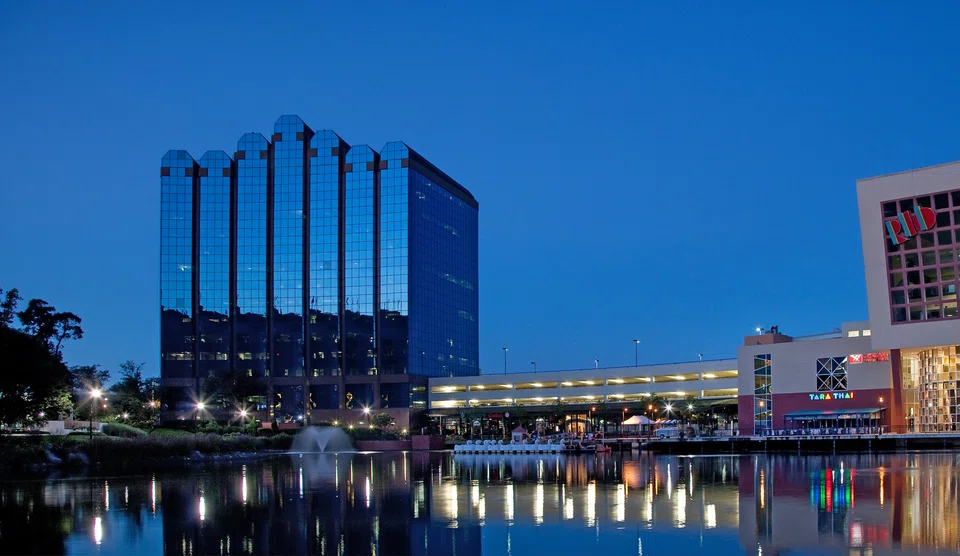
Prime US REIT is a US focused office REIT that holds mostly Class A freehold offices in key United States markets.
What I Like About Prime US REIT:
-
What I Do Not Like About KORE:
Debt maturity profile is very clunky with over 80% of the debt concentrated in a single year (2027)
Tenant concentration risk is high and WALE for top 10 tenants is low. This may present a high risk of devaluation in the near term should one of their top tenant chooses not to renew their tenancy in the current climate where office supply significantly outweighs demand.
Majority of Prime US REIT free cash flow is tied up to operational CAPEX to ensure that their current property remains competitive for the purpose of tenancy retention. As a result, it is unlikely that distributions will recover anytime soon without a recovery in the industry.
Updates From Recent Performance (FY 2025)
General Comments:
Distributable income payout ratio increased progressively in 2025 from 10% to 60%.
Completed a US$25 million private placement with the intention of using 53.6% of the gross proceeds to fund the tenant incentive and capital expenditure requirements. The remaining proceeds that are unused will
Occupancy improved by 2.7% to 82.7%, which in turn supported the property valuations, which saw a recovery of 3.5%. This has helped reduce gearing ratio by 1.7%. However, the cost of borrowing increased by 0.3% to 5.40%.
Top and bottom-line performances saw a decline largely due to absence of contribution from One Town Centre, lease expiries and higher finance expenses.
CAPEX of US$36.4m coincided with a positive fair-value change of US$11.1m. For the first time, capital spend is associated with valuation uplift rather than absorption. That said, the uplift is attributed to signed-but-not-yet-paying leases (improved contracted cash flows), so it is a forward-looking valuation assumption, not banked income.
Positive Headwinds:
-
Negative Headwinds:
In a depressed market, Prime US REIT has limited options with regard to capital recycling or liquidating their assets to improve balance sheet health, resulting in a trapped asset scenario.
Independent Market Review Analysis
Asset Occupancy vs Market
Asset (Market) | Mkt Occ | REIT Occ | WALE (yr) | Verdict |
222 Main (Salt Lake City) | 76.9% | 89.6% | 5.9 | Outperforming — backfilled by US Attorney's Office govt lease |
171 17th Street (Atlanta) | 75.0% | 65.7% | 4.9 | Underperforming — below an already-weak market |
VCS II (Denver) | 73.7% | 100.0% | 2.5 | Outperforming, future at risk — full, but 2.5yr WALE into a rising-vacancy market |
Park Tower (Sacramento) | 85.4% | 89.9% | 6.9 | Outperforming on recovery — jumped from 65.5%; credit the DA lease, not a market beat |
Sorrento Towers (San Diego) | 85.4% | 94.4% | 2.9 | Outperforming, future at risk — short WALE, San Diego rent softening |
Tower 909 (Dallas) | 75.2% | 92.5% | 3.5 | Outperforming — in the one genuinely improving market |
CrossPoint (Philadelphia) | 77.5% | 94.7% | 6.9 | Outperforming — long WALE cushions weak market |
The 101 (St Louis) | 81.5% | 77.0% | 5.0 | Underperforming — below market in a declining-rent market |
Promenade I&II (San Antonio) | 84.0% | 84.4% | 5.0 | In-line |
Waterfront (Suburban MD) | 76.7% | 87.3% | 8.3 | Outperforming on recovery — from 48.7%; X-Energy lease, not market beat |
VCS I (Denver) | 73.7% | 63.0% | 4.6 | Underperforming — below a weak market |
Tower I Emeryville (Oakland) | 72.9% | 51.9% | 4.5 | Underperforming badly — 21pts below a collapsing market |
Reston Square (Suburban VA) | 76.0% | 67.5% | 7.7 | Underperforming — below market, but long WALE |
PRIME outperforms its (uniformly weak) markets at the portfolio level, but the outperformance is concentrated and partly engineered: the two headline "wins" (Park Tower, Waterfront) are recoveries from depressed bases via single government/institutional leases — not market beats. Four assets (171 17th, The 101, VCS I, Reston, Emeryville) sit below their already-soft markets. Emeryville is the clear failure: 51.9% occupancy versus a 72.9% market, in the worst-performing market in the portfolio.
Rent Reversion Reality Check
Management claims +5.6% average rental reversion in FY2025.
IMR support is thin. Across PRIME's 12 markets, asking-rent growth was −6.6% to +2.6% (excluding the San Antonio mix-shift anomaly). A blended portfolio market-rent change is roughly flat to +1%. A +5.6% reversion therefore, is not explained by market mark-to-market — the markets did not move +5.6%.
Likely composition: the reversion is dominated by re-leasing space that had rolled to expiry at below-market or recovering from depressed pandemic-era rents (recovery from a depressed base), plus the specific economics of long government leases at Park Tower/222 Main. This is a recovery/leasing-execution number, not evidence of pricing power. Treat the +5.6% as a backward-looking re-leasing spread, not a forward market signal.
Supply Risk Map
Market | IMR Supply Signal | PRIME CRI Exposure | Risk for REIT |
Salt Lake City | Pipeline 0 sf | 11.8% | Low |
Atlanta | 200k, tapering | 12.1% | Moderate |
Denver | 301k + sublease overhang, vac ↑ | 10.8% (two assets) | High |
Sacramento | 254k + state move-outs | 9.5% | Moderate |
San Diego | 243k Horton, +240bps vac risk '26 | 11.7% | Moderate-High |
Oakland/ Emeryville | 0 sf but rents −6.6%, vac 27% | 4.0% | Elevated (demand, not supply) |
Philadelphia | 438k, negative absorption | 8.7% | Moderate-High |
Dallas | 626k (largest pipeline) | 10.0% | Moderate-High |
St Louis | 0 sf, rents −2.8% | 7.6% | Moderate |
San Antonio | 0 sf | 5.9% | Low-Moderate |
Suburban MD | 0 sf, inventory shrinking | 4.9% | Moderate |
Suburban VA | 0 sf, federal pullback | 3.0% | Moderate-High |
% of CRI in genuinely defensible markets (low supply + non-negative rent): ~18% (Salt Lake City + San Antonio).
% of CRI in elevated/high-risk markets (rising vacancy OR falling rent OR large pipeline): ~50%+ (Denver, Oakland, Philadelphia, Dallas-pipeline, San Diego-delivery, St Louis).
Single most supply/demand-exposed asset: VCS II (Denver) — 100% occupied but only 2.5-year WALE rolling into a market where vacancy rose to 26.3% and absorption was −1.56m sf. When this lease rolls, PRIME re-leases into the weakest fundamentals in its portfolio. The honourable mention is Emeryville, already failed on the demand side.
DPU Defensiveness — Multi-horizon
Horizon | Verdict | Key Driver |
Near-term (FY2026) | Mixed-Positive | Park Tower DA lease + X-Energy rent commences; DPU rises mechanically as signed leases activate |
Medium-term (FY2027) | Mixed | VCS II (Denver) 2.5yr WALE rolls into 26% vacancy; Sorrento (San Diego) short WALE meets Horton supply; refinancing of mid-2026 maturities at 5%+ |
Long-term (FY2028+) | Negative-Mixed | Structural: 50%+ of CRI in soft markets; Emeryville unresolved; cap rates 7–9.5% cap NAV recovery; CAPEX intensity (per prior analysis) structurally limits payout |
Overall Takeaway:
PRIME's own Cushman & Wakefield IMR undercuts the "sector recovery" framing more than it supports it: none of PRIME's twelve markets is a tight, defensible market, net absorption was negative across the basket, and rents fell in half of them.
The genuine tailwind — flight to Class A quality amid a collapsed construction pipeline — is real and explains why PRIME's assets out-occupy their local markets. Still, the two flagship FY2025 leasing wins (Park Tower, Waterfront) are recoveries from depressed bases via single government/institutional tenants, not market beats. The claimed +5.6% reversion is a re-leasing spread, not market pricing power.
The capital-preservation picture is the concern: ~55–60% of cash rental income sits in softening markets, the Denver concentration rolls into the weakest fundamentals in the portfolio, and Emeryville is carrying a ~50% write-down at 51.9% occupancy with no disclosed divestment or turnaround plan — that silence is the single clearest tell in the report.
DPU is mechanically improving as signed leases commence, but it is recovering on top of structurally weak markets, not defensible ones.
Download Full Report On Telegram
and continue reading my independent analyst report which will provide you with a detailed look at the fundamentals of the stock and a range of price targets to help you out with your investment decision for Prime US REIT:

*Join the channel → click on the channel name → under files → download the report you want!
If you would like to learn about REIT investing, you can find my entire methodology in my eBook: Retire With REITs here:

If you are looking for personalized financial advice, I offer a 1-to-1, fee-only consultation where you will receive personalized strategies to design, implement and manage a profitable REIT portfolio. You can find out more about it here:

Connect with me on social media platforms to receive updates on future content! You can also slide into my DMs if you have any questions :)


Disclaimer:
This article is meant to be the opinion of the author
This article is for information purposes only
This article should not be seen as financial advice
This advertisement has not been reviewed by the Monetary Authority of Singapore
![Is Lendlease Global Commercial REIT A Good Buy in 2026? [Fundamental Analysis]](https://static.wixstatic.com/media/5dc7f7_7245fb8a3ea647a98a8cc0a722026afb~mv2.png/v1/fill/w_1277,h_720,fp_0.50_0.50,q_35,blur_30,enc_avif,quality_auto/5dc7f7_7245fb8a3ea647a98a8cc0a722026afb~mv2.png)
![Is Lendlease Global Commercial REIT A Good Buy in 2026? [Fundamental Analysis]](https://static.wixstatic.com/media/5dc7f7_7245fb8a3ea647a98a8cc0a722026afb~mv2.png/v1/fill/w_972,h_548,fp_0.50_0.50,q_95,enc_avif,quality_auto/5dc7f7_7245fb8a3ea647a98a8cc0a722026afb~mv2.png)
![Is Starhill Global REIT A Good Buy in 2026? [Fundamental Analysis]](https://static.wixstatic.com/media/5dc7f7_0d57ccbf637141408d057409f5765fc8~mv2.png/v1/fill/w_1277,h_720,fp_0.50_0.50,q_35,blur_30,enc_avif,quality_auto/5dc7f7_0d57ccbf637141408d057409f5765fc8~mv2.png)
![Is Starhill Global REIT A Good Buy in 2026? [Fundamental Analysis]](https://static.wixstatic.com/media/5dc7f7_0d57ccbf637141408d057409f5765fc8~mv2.png/v1/fill/w_972,h_548,fp_0.50_0.50,q_95,enc_avif,quality_auto/5dc7f7_0d57ccbf637141408d057409f5765fc8~mv2.png)
![Market Updates] 2026 Quarter 3](https://static.wixstatic.com/media/5dc7f7_256fbd90790d45ea92db80a717c55d8f~mv2.png/v1/fill/w_1277,h_720,fp_0.50_0.50,q_35,blur_30,enc_avif,quality_auto/5dc7f7_256fbd90790d45ea92db80a717c55d8f~mv2.png)
![Market Updates] 2026 Quarter 3](https://static.wixstatic.com/media/5dc7f7_256fbd90790d45ea92db80a717c55d8f~mv2.png/v1/fill/w_972,h_548,fp_0.50_0.50,q_95,enc_avif,quality_auto/5dc7f7_256fbd90790d45ea92db80a717c55d8f~mv2.png)
Comments